Contents
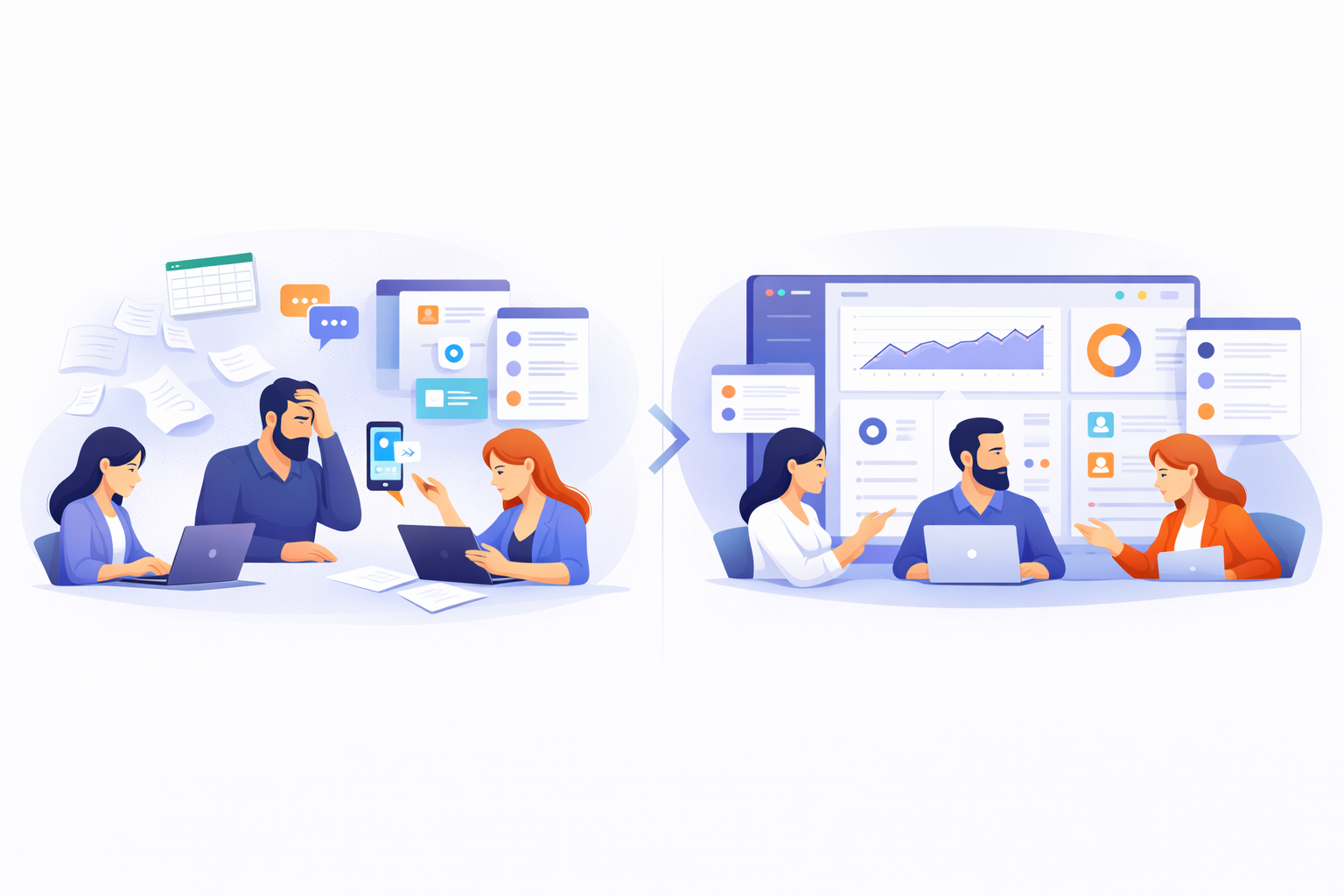
Operations keep growing. More clients, more orders, more people on the team. But your processes aren't keeping up. What used to work with a spreadsheet and a few WhatsApp messages has now become a daily bottleneck.
If that sounds familiar, it's not an organization problem. It's a tooling problem. And the real question isn't whether you need software — it's when it actually makes sense to build something custom.
Custom software is a digital solution built specifically for your company, your processes, and your needs. It's not a SaaS product you adapt to your workflow, or a template with your logo on it.
Unlike off-the-shelf tools like generic ERPs or project management platforms, custom software is designed from scratch to solve your exact problem — no unnecessary features, no limitations imposed by a third party.
The upfront cost is higher, but the return is different too. When the tool actually fits your operation, your team works better, you make fewer mistakes, and you can scale without breaking things.
If someone on your team spends hours copying data from one place to another, filling out forms by hand, sending emails with information that should be automated, or updating spreadsheets that could update themselves — you're losing time and money in a systematic way.
Digitizing that process isn't just more convenient: it reduces errors, frees your team for higher-value work, and makes the operation scalable.
Your CRM lives in one place, invoicing in another, inventory in a spreadsheet, and internal communication on WhatsApp. Every part of the business is siloed, and connecting them depends on someone doing it manually.
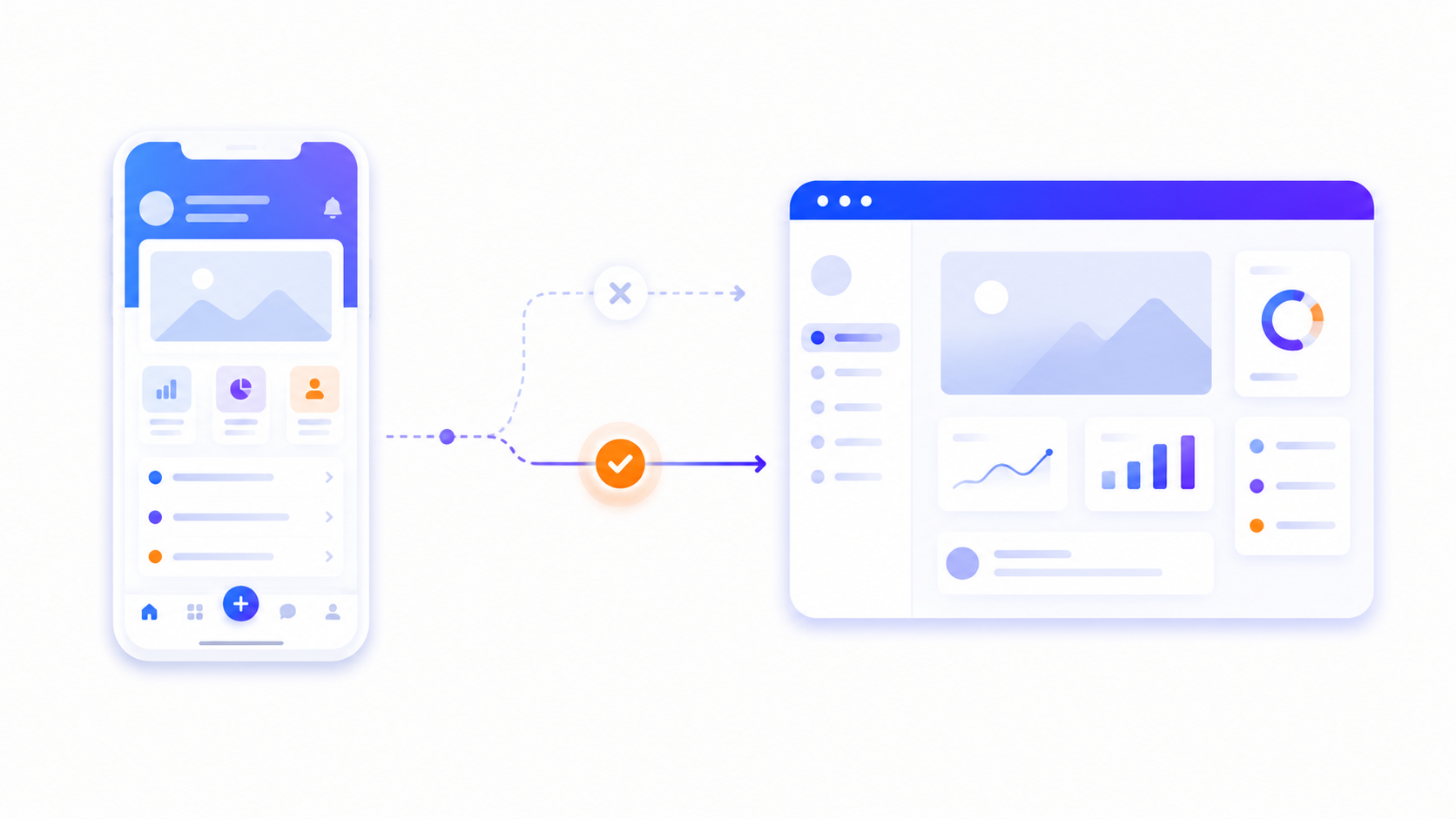
When systems aren't integrated, information arrives late, with errors, or not at all. Custom software can centralize everything or connect your existing tools so they actually communicate.
There's a moment when you stop using a tool for what it was designed for and start working around it. You use note fields to store structured data. You create workflows the system doesn't natively support. You export data to do things that should happen inside the tool.
When you reach that point, the tool is no longer working for you. You're working for the tool.
If knowing how much you sold this month means asking someone to cross-reference several Excel files — or if you have no real-time visibility into your operation — you have a visibility problem.
Well-designed software gives you that visibility without effort. The data is there, organized, accessible, and ready to inform decisions.
What worked with 10 orders a day doesn't work with 200. What was manageable with 5 people becomes chaos with 25. If growth is generating more friction instead of more flow, your processes weren't built to scale.
Scaling with the wrong tools is more expensive in the long run than investing in the right solution upfront.
Being honest here matters too. Building from scratch isn't always the right move.
If your process is standard and a good tool already covers it well, use it. If you're validating a business model and don't yet know if it'll work, don't invest in custom development yet. If the problem is adoption or training — not technology — software won't fix it.
The key question is: is my problem specific enough that a generic solution won't handle it well? If the answer is yes, custom development is worth exploring.
It's the question everyone asks, and the honest answer is: it depends. But that doesn't mean there are no useful reference points.
The cost of custom software varies mainly based on the complexity of the project, the number of integrations with other systems, whether it includes a mobile app or just a web platform, and whether you're starting from scratch or improving something that already exists.
As a rough reference for the European market:
Digitizing a simple internal process (forms, approval flows, basic automations): from 500€.
MVP of a web or mobile application with core features and a management panel: from 6,000€.
Complex platform with multiple modules, integrations, and advanced business logic: from 25,000€.
These are ballpark figures. What impacts the final budget most isn't the size of the project — it's the clarity of scope. A well-defined project from the start is always cheaper than one that shifts as it progresses.
Another factor to consider is ongoing maintenance. Custom software isn't a one-time expense: it needs to evolve with your business. Having a team that maintains and improves it continuously is part of the total cost to factor in.
Many companies delay this decision because custom development seems expensive. And it does have a cost. But what rarely gets calculated is the cost of staying put.
How many hours does your team waste on tasks that could be automated. How many errors come from manual processes. How many opportunities are lost due to lack of visibility. How much does an operation that can't scale slow your growth.
When you put it on the scale, in many cases custom software isn't an expense. It's an investment with measurable returns.
The first step is understanding the problem clearly before thinking about solutions. Which processes cause the most pain. Where the most hours are lost. What information is missing. What can't be done today that should be possible.
From there, you can define what to build, in what order, and at what scope. You don't always need to build everything at once. In most cases, it makes more sense to start with what generates the most impact and grow from there.
At Blimbur, we work with companies that are at exactly this point: they know something needs to change but aren't sure what or how. If that's you, we can help you figure out what makes sense to build — and what doesn't.
Tell us about your project and we'll get back to you within 24 hours.
A SaaS is a standard product designed for many types of business. Custom software is built specifically for your business, your processes, and your needs. You don't adapt your company to the tool — it's the other way around.
It depends on scope. A simple digitization project can be ready in 4 to 6 weeks. A web or mobile app MVP typically takes 8 to 12 weeks. A complex platform can take several months. The biggest factor affecting the timeline is having the scope clearly defined before development starts.
No. What you need is a clear understanding of the problem you want to solve and how your business works. The technical team handles translating that into a solution. A good development company will guide you from definition through to delivery.
Custom software requires ongoing maintenance and evolution: bug fixes, security updates, new features as the business grows. It's important to have a team that can handle this long-term, not just the initial build.
If the underlying technology is solid and the issue is functionality or integration, improving what exists is usually more efficient. Building from scratch makes sense when the current architecture can't scale, when maintenance costs are disproportionate, or when the business has changed so much that the tool no longer fits.
Our clients' satisfaction is our best introduction.
"Tengo un negocio de Paquetería, en el que vienen muchas personas diariamente, tanto para recoger como para dejar paquetes. Llevábamos años gestionando muchos de nuestros procesos de paquetería de forma manual, y gracias a Blimbur Technologies hemos dado un salto enorme. Nos desarrollaron una app móvil y una web totalmente adaptadas a nuestro flujo de trabajo, con las que ahora tenemos todo automatizado, trazable y mucho más rápido. Ahora, el cliente sabe si tenemos el paquete y al estar todo mucho más organizado, es mucho más rápido y ágil, lo que hace que los clientes vengan y se vayan con otra cara y sin esperas. El trato ha sido impecable y el resultado, todavía mejor. Un equipo serio, técnico y que se implica de verdad."