Contents
"We want to automate with AI." We hear that almost every week. And it usually hides the same confusion: the idea that artificial intelligence can take care of everything, with no clear rules, no organised data, and no one having to think about the process itself.
The reality is more concrete. AI can do genuinely useful things inside your company today, but only if you know where it fits and where it does not. This article is here to give you that map before you invest time and money in something you may not have needed, or in something you expected to run on its own.
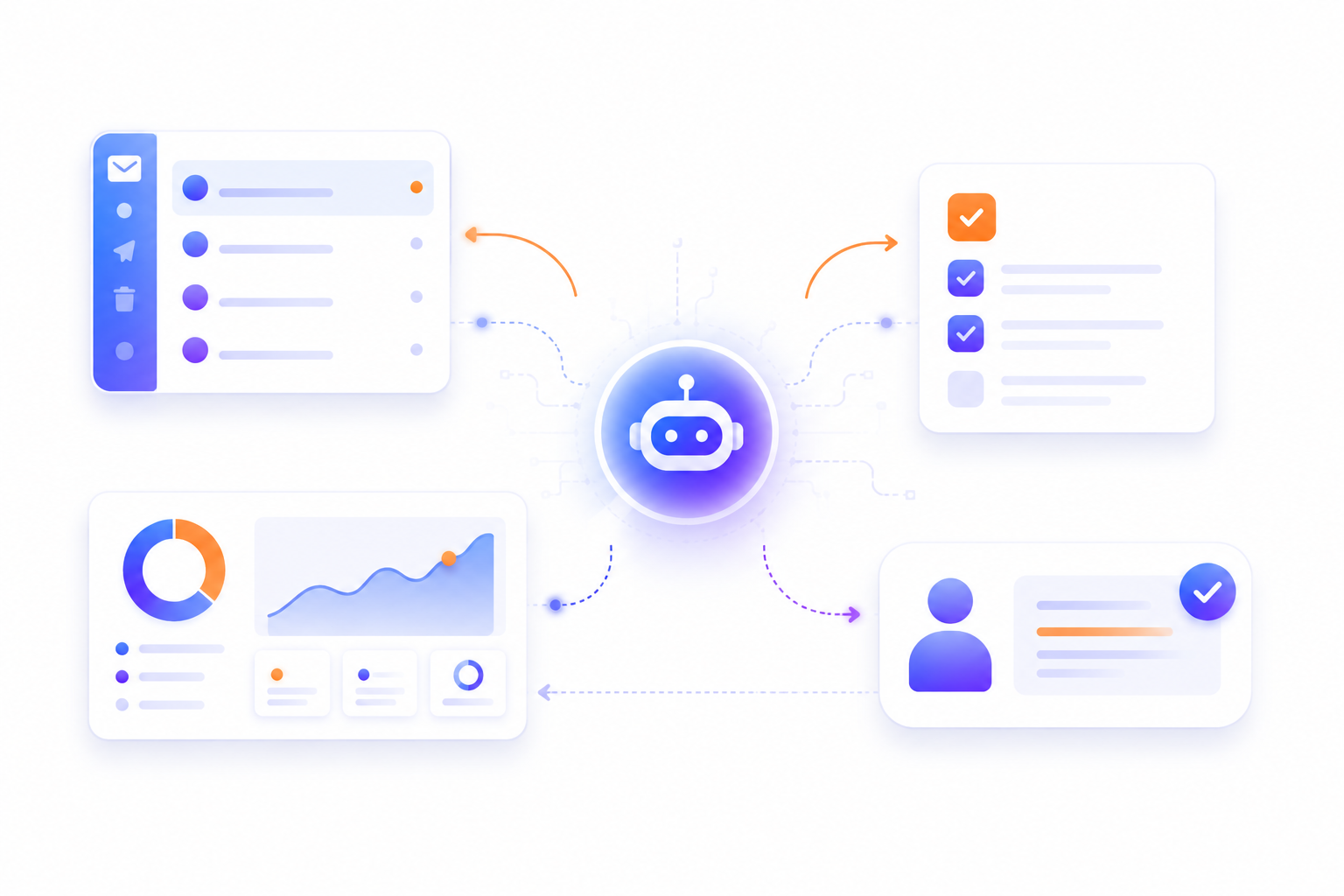
To automate is to make a task happen without manual intervention. AI comes in when that task involves interpreting language, images, or messy data: reading an email and understanding what it asks for, classifying invoices, summarising a conversation, or drafting a first version of something.
Not every automation needs AI. Moving data from a form into a spreadsheet, sending an email when someone submits a form, or syncing two tools are classic automations that work perfectly well without a language model behind them. Confusing the two is the first mistake many companies pay for.
These are tasks that already work well with current technology, built into real workflows:
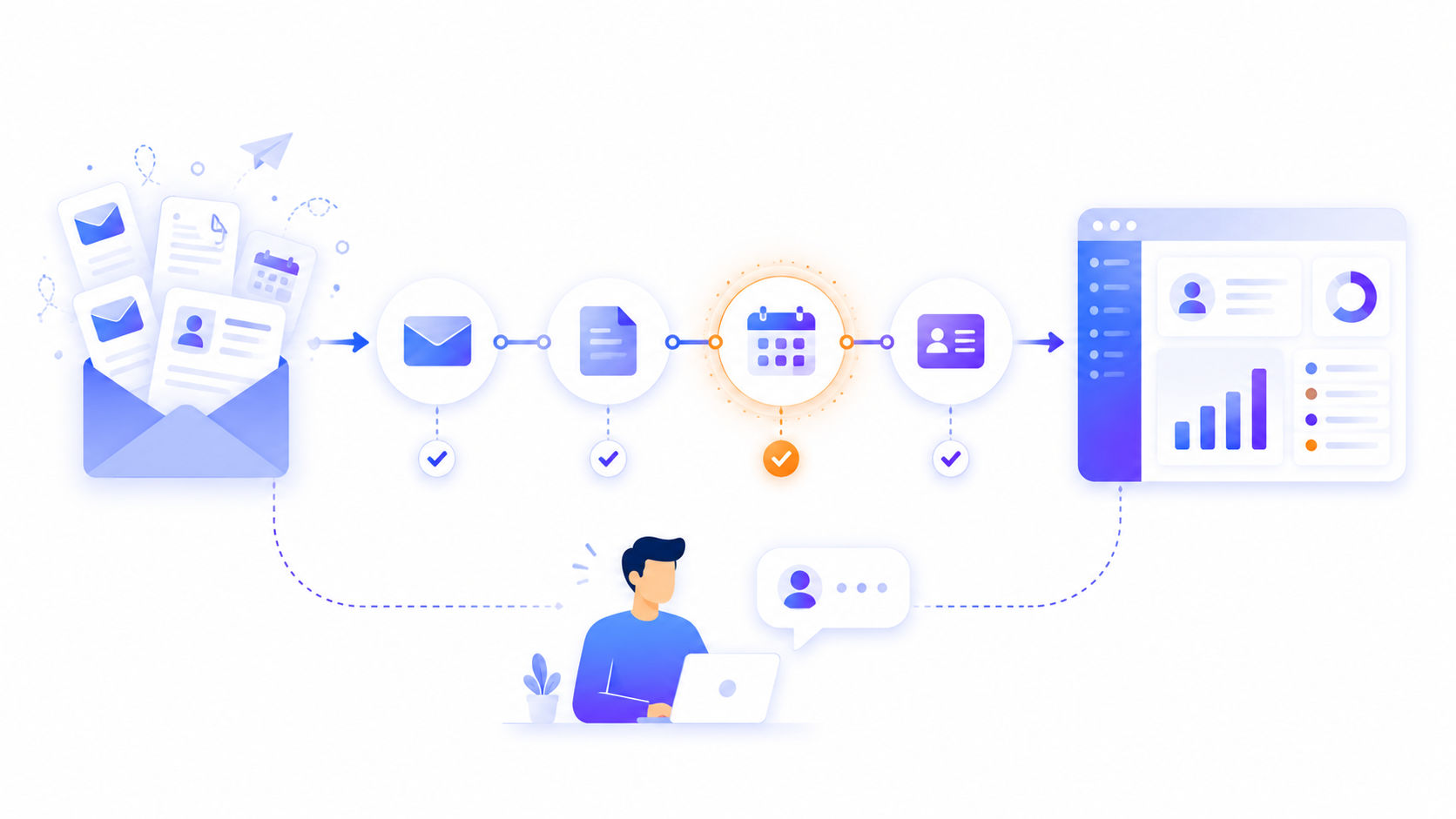
Read and classify incoming emails, tickets, or messages and route them to the right area.
Extract data from documents: invoices, contracts, delivery notes, or unstructured PDFs.
Draft first versions of replies, descriptions, or content that a person then reviews.
Summarise meetings, calls, or long email threads into actionable points.
Answer frequent customer questions based on your own documentation.
Spot patterns in data: customers about to churn, unusual orders, demand spikes.
Translate and adapt content into several languages while keeping the tone.
The common thread: repetitive, text- or data-based tasks where a small margin of error is acceptable because a person is still watching the important cases.
This is where it pays to be honest, because inflated expectations are the number one cause of failed projects.
Make critical decisions without oversight: approving a payment, signing a contract, or any decision with legal consequences needs a person behind it.
Work without data: if your information lives on paper, in people's heads, or scattered across emails, AI has nothing to learn from.
Guarantee 100% accuracy: models make mistakes, and in zero-error processes that is a serious problem.
Understand your business on its own: it needs context, rules, and examples that someone has to define.
Replace a process that does not even exist: you cannot automate chaos, you have to organise it first.
Maintain itself: it needs adjustments, supervision, and improvements over time.
None of this means AI is useless. It means it works within limits, and knowing those limits is what separates a profitable project from an expensive disappointment.
This is the question that saves the most money. Many companies ask for "AI" when what they need is a well-built integration between the tools they already use.
A good sign you need AI: the task involves interpreting text or data that changes shape every time (no email is written exactly like the last one). A good sign you do not: the task always follows the same fixed, predictable rules.
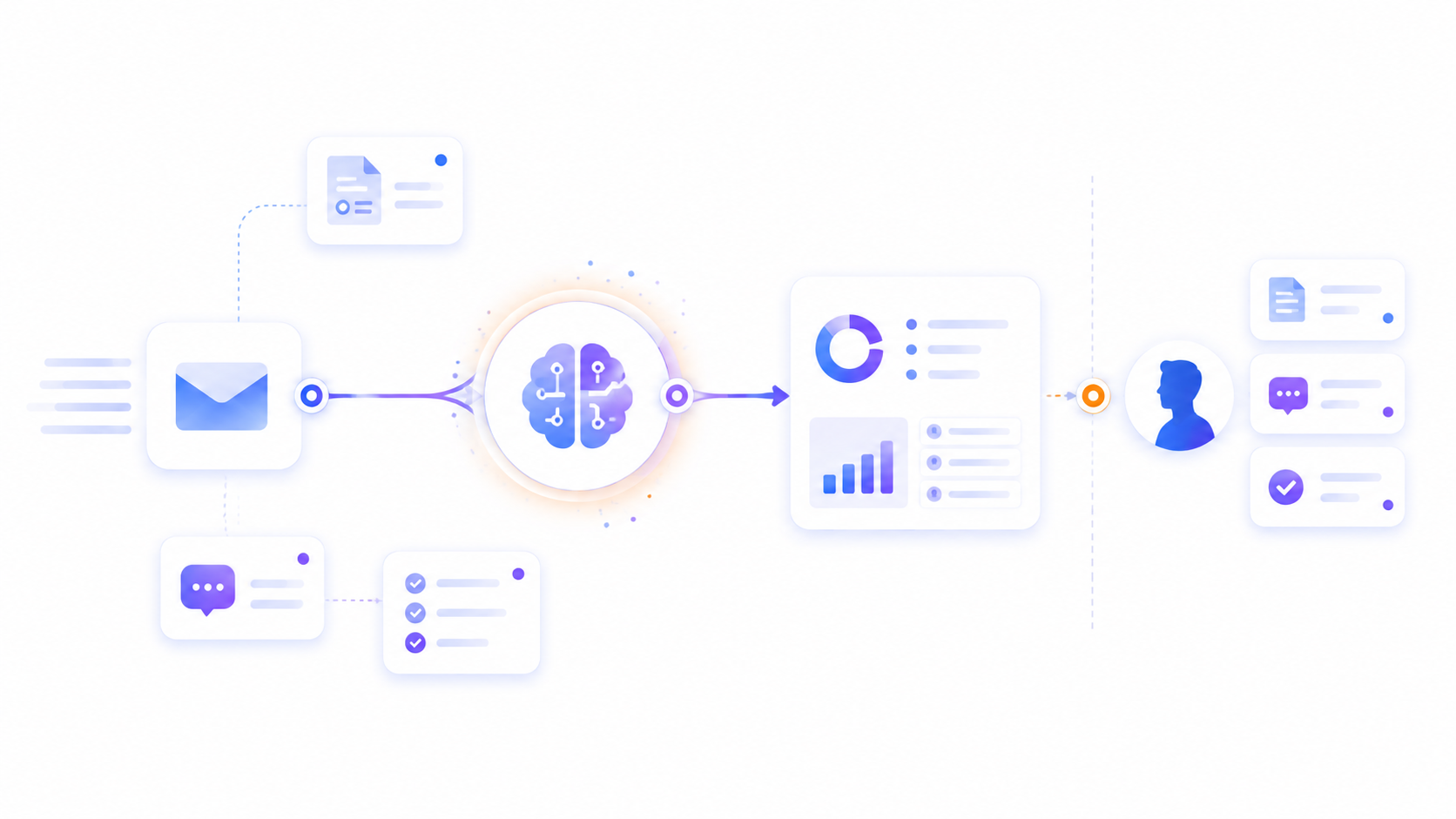
In practice, many of the best projects combine both: classic automation to move the data, and AI only at the specific point where something has to be interpreted. Paying for AI where it adds nothing is wasted budget.
Automation projects that go well almost always follow the same pattern:
Start with one concrete, measurable process, not with "automating the company".
Pick a task that repeats often and eats up real hours every week.
Make sure the data that process needs actually exists and is accessible.
Keep a person supervising at first, until you trust the results.
Measure the time saved before and after, so you know whether it truly pays off.
A small project that works and saves real hours is worth more than an ambitious plan that never reaches production.
AI can do a lot for your company today: read, classify, extract, summarise, and draft from text and data. What it cannot do is run without data, decide without supervision, or organise a process that does not exist yet.
The difference between automation that saves hours and automation that creates frustration is not the technology. It is choosing the right problem and being realistic about what the tool can and cannot do.
Repetitive, text- or data-based tasks: classifying emails and tickets, extracting information from documents such as invoices or contracts, summarising meetings, drafting first versions, or answering frequent questions based on your own documentation.
If the task always follows the same fixed, predictable rules, classic automation is usually enough. AI adds value when something has to be interpreted from text or data that changes shape every time, like an email that is never written the same way twice.
It depends on the scope. A small, well-defined project can be very profitable; costs spike when the scope is ambiguous or the data is not organised. The most cost-effective approach is to start with one concrete process and measure the time saved.
Today AI works better assisting people than replacing them. It handles the repetitive part and leaves the important decisions to your team. Most companies use it to increase productivity, not to cut headcount.
A clear process and accessible data. If the information lives on paper, in people's heads, or scattered across emails, the first step is to organise it, not to automate it.
A well-scoped project can be in production within a few weeks and start saving hours almost immediately, as long as the scope is defined from the start.
Our clients' satisfaction is our best introduction.
"Tengo un negocio de Paquetería, en el que vienen muchas personas diariamente, tanto para recoger como para dejar paquetes. Llevábamos años gestionando muchos de nuestros procesos de paquetería de forma manual, y gracias a Blimbur Technologies hemos dado un salto enorme. Nos desarrollaron una app móvil y una web totalmente adaptadas a nuestro flujo de trabajo, con las que ahora tenemos todo automatizado, trazable y mucho más rápido. Ahora, el cliente sabe si tenemos el paquete y al estar todo mucho más organizado, es mucho más rápido y ágil, lo que hace que los clientes vengan y se vayan con otra cara y sin esperas. El trato ha sido impecable y el resultado, todavía mejor. Un equipo serio, técnico y que se implica de verdad."